

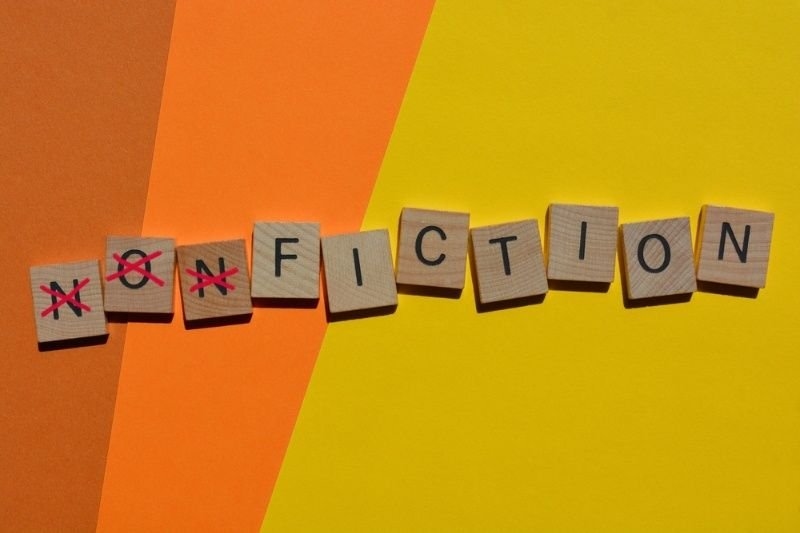
Books have different jobs. Some pull you deep into another life with incredible detail; others break down the nuts and bolts of how things work. That’s the real starting line for fiction versus nonfiction: one deals in invented worlds and characters, the other anchors itself in reality, facts, or someone’s lived experience.
But here’s the thing—choosing isn’t just about picking the “best” kind. It’s about what makes sense for you right now. What are you in the mood for? What do you want out of your reading time? Someone curled up before bed probably wants a story to dream on, while someone chasing answers needs straight-up facts. In this blog, we’re digging into what fiction and nonfiction actually mean, the genres, some examples, and, honestly, how to pick what suits you.
The simplest difference between fiction and nonfiction is whether the work is presented as invented or factual. Fiction creates a story, even when parts are inspired by real events. Nonfiction deals with reality, although the writer’s interpretation can still shape how that reality is presented.
So, what are fiction and nonfiction books really? Fiction books may include novels, short stories, fantasy, romance, thrillers, or historical fiction. Nonfiction books include biographies, memoirs, essays, history, science, business, and self-help.
The fiction book's meaning is fairly direct. Fiction books are works in which characters, settings, or events are invented or imagined by the author. They can feel realistic, but realism does not turn fiction into fact.
The nonfiction books' meaning refers to books presented as factual accounts, explanations, arguments, or records. A biography discusses a real person. A science book explains real concepts. The writing may contain opinions, but its subject is not invented.
Also Read: Why Young Adult Literature Captivates Readers of All Ages
A quick comparison makes how are fiction and nonfiction books different easier to see.
| Feature | Fiction Books | Nonfiction Books |
|---|---|---|
| Main purpose | Storytelling and imagination | Information, explanation, or real experience |
| Content | Invented or imagined | Based on factual subjects |
| Common formats | Novels, short stories | Biographies, memoirs, essays |
| Typical reading goal | Entertainment, emotion, reflection | Knowledge, context, practical insight |
| Examples | The Hobbit, Pride and Prejudice | Sapiens, Educated |
Neither category automatically means better writing. A badly written factual book is still badly written. A brilliant novel can communicate an idea more powerfully than a textbook.
That is why fiction vs nonfiction should be treated as a preference question, not a quality contest.
There are many types of fiction books, which means readers who say they dislike fiction may simply dislike one particular type. Fantasy is very different from literary fiction. A crime novel creates a completely different reading experience from romance.
Common fiction genres include:
Fiction book examples make these categories easier to understand. Harry Potter represents fantasy, Gone Girl fits psychological thriller, while Pride and Prejudice is a classic romance with strong social commentary.
Historical fiction can also mix documented settings with invented characters. The boundaries can feel less rigid than they first appear. That variety is the point.
The types of nonfiction books are just as broad. You can read about economics in the morning, a memoir at night, and then pick up a history book the next day.
Popular nonfiction genres include:
Useful nonfiction book examples include Educated for memoir, Atomic Habits for personal development, and A Brief History of Time for popular science.
These books do not all have the same purpose. One tells a life story, another offers behavioral advice, and another explains scientific ideas. Nonfiction is not one reading experience.
Your preferred book genres should usually match why you are reading. This is where fiction vs nonfiction books, which is better, becomes less useful as a question.
Ask what you actually want from the next book.
| If You Want | Try |
|---|---|
| Escape from routine | Fantasy or romance |
| Suspense | Mystery or thriller |
| New factual knowledge | History or science |
| Personal experiences | Memoir |
| Practical ideas | Business or self-help |
| Emotional reflection | Literary fiction |
If you are asking, should I read fiction or nonfiction, start with your immediate goal. Want to disappear into a story for two hours? Pick fiction. Want to understand a subject or develop a practical skill? Nonfiction may fit better.
But you do not need to pick one permanently. Alternating between both can keep reading from becoming repetitive.
Knowing how to tell if a book is fiction or nonfiction is usually easy, but some books blur the edges. Check the publisher’s category, description, or library classification first.
A novel is generally labeled fiction even when it uses real historical events. A memoir is nonfiction because the author presents their own real experiences. Creative nonfiction can use storytelling techniques while remaining rooted in factual material.
When uncertain, check how the book is marketed. That usually settles it.
For fiction vs nonfiction for beginners, the easiest mistake is choosing a book because it is considered important rather than because you actually care about the subject.
Start with accessible books. Shorter works can help too.
For readers searching for fiction and nonfiction books for beginners, a mystery novel, contemporary romance, short memoir, popular history title, or practical nonfiction book can be a better starting point than a dense classic or academic work.
So, which is better fiction or nonfiction? There is no universal answer. Fiction can strengthen imagination, perspective, and emotional engagement. Nonfiction can build knowledge, context, and practical understanding.
The better choice is the one that matches what you need now.
Someone recovering from a long workday may prefer fiction. Someone researching a career change might reach for nonfiction. The same reader can want both in the same week. That is normal.
Don't Miss: Non-Fiction Narratives: Crafting Engaging Real Stories
The big takeaway? Categories help, but don’t let them box you in. Fiction can make you pause and think. Nonfiction gets personal and, sometimes, wildly entertaining. The strongest books—no matter the label—stick with you long after you finish.
Take genre as a starting point, not gospel. Notice your mood, your goals, and what naturally grabs your attention. If you’re new to reading, try a bit of everything before landing on what really clicks.
So when it comes to fiction vs nonfiction, nobody wins. The real winner is the book you’ll actually read to the end.
Definitely. Historical fiction or some novels use historical persons, places, or events. They weave in new characters or what-if moments along the way. Just because a story uses real history doesn’t mean it’s nonfiction.
Nonfiction writers use storytelling tools—things like dialogue or scene-setting—to make it all flow. But the difference is, the facts come first. Nonfiction is still responsible for being true to its subject, not just entertaining.
Of course. These are simply another listening experience of a book. Content either remains the same when you read it as when you hear it—that's fiction, biography, or nonfiction.
Not always. Your reading speed depends on the language of the book, how much experience you have reading the subject matter, and how you typically read the material. Sometimes a novel races by, while a dense nonfiction book takes a little longer.
Absolutely. A story can swing between romance and mystery; a memoir might double as a history lesson. Genre labels blur all the time—books rarely stay in their lane.
This content was created by AI